WellCommand™
Predictive Well Intelligence
wellcommand.ai/weekly-command
A WellCommand™ Weekly Brief

From the Rig Floor Report

Edition No. 17 Week of November 4–10, 2026 Coverage Market · Offshore · Digital

The week’s signal is that rig time is being booked further out, while the industry starts asking who gets paid when that time is shortened. Jackup awards in Kuwait and India locked rigs into multi-year terms starting in 2027, and a McKinsey analysis reported by Drilling Contractor argued that AI-driven reductions in well duration are forcing a rethink of the dayrate contract itself.

Five verified items — every date and figure checked against a primary source or established trade publication before inclusion. Contractor- and operator-reported figures are labeled as such, and consultant estimates are labeled as estimates. Here’s what actually moved.

This Week on the Floor
Offshore World Oil · November 9, 2026

ADNOC Drilling enters offshore Kuwait with two jackup contracts from KOC

ADNOC Drilling received letters of award from Kuwait Oil Co. (KOC) for two high-specification offshore jackup rigs, with a combined maximum value of about $313.6 million (KWD 96.6 million). The contracts carry a four-year firm term with a one-year option, and the option value is not included in the contract value. Operations are expected to start in the fourth quarter of 2027, with the first full-year contribution expected in 2028.

ADNOC Drilling will deploy one owned rig and one bareboat-chartered rig. World Oil reports that the awards mark the company’s entry into offshore Kuwait and its first offshore rig operations outside the UAE. CEO Abdulla Naji Ateya Al Messabi called the award “an important step forward in our international growth journey.” The contracts remain subject to final conditions and formalities. Figures are contractor-reported.

Why it matters

A four-year firm term in a new country, with a rig not yet in the operator’s system, puts the early wells under the most scrutiny. A contractor entering a new basin is judged on how quickly it reaches steady, low-downtime operations, and that depends on spotting developing problems early rather than learning the basin through lost days.
Read the source →
Digital · Feature Drilling Contractor · November 10, 2026

McKinsey: AI is forcing a rethink of drilling contracts

Drilling Contractor reported on a talk by Bill Ambrose, Partner at McKinsey & Company, given at the 2026 IADC Contracts & Risk Management Conference in Houston on October 6. Ambrose said McKinsey’s research across more than 550 upstream oil and gas AI use cases points to a value opportunity of more than $230 billion per year, with real-time ROP optimization ranked third at $16 billion and predictive maintenance at $11 billion. A McKinsey well delivery analysis released in August 2026 found that AI can help operators reduce well construction durations by 9–12%.

The commercial problem is that under dayrate contracts those gains flow mainly to operators. McKinsey estimates full AI adoption could erode about $24 billion in oilfield service company valuation, of which roughly $20 billion could be recovered by applying AI to the sector’s own costs, leaving a $4 billion gap tied to commercial models. McKinsey expects tenders to split drillers into “activity providers and performance partners,” with only partners likely to share in AI’s upside. The article identifies data ownership and liability for autonomous decisions as unresolved contract issues. All figures are consultant estimates, not field results.

Why it matters

If well time falls and contracts still pay by the day, the incentive to remove lost time sits unevenly between operator and contractor. Performance-based terms change that: a contractor paid on outcomes has a direct reason to catch problems earlier. The open questions McKinsey raises — how success is measured and who is accountable — will decide how fast that shift happens.

Read the source →
Performance Drilling Contractor · November 10, 2026

Malampaya Phase 4 reaches first gas five months early

Prime Energy, operator of Service Contract 38, delivered first gas from the Malampaya Phase 4 (MP4) project offshore the Philippines, bringing the Malampaya East-1 and Camago-3 wells into the existing production system. The two deepwater wells were drilled by the drillship Noble Viking and tie back to the Malampaya platform through new subsea infrastructure. They are estimated to add 222 bcf of recoverable gas.

MP4 reached first gas 27 months after final investment decision, about five months ahead of its original schedule. Initial well tests indicate the wells could extend the field’s productive life by about six years, depending on future gas offtake. Drilling Contractor notes it was the Philippines’ first offshore drilling campaign in more than a decade. Figures are operator-reported.

Why it matters

A first offshore campaign in over a decade means limited recent local offset experience, which is usually where schedules slip. Finishing ahead of plan under those conditions suggests trouble was handled while it was still small. On deepwater tiebacks, the drilling phase is often where months are won or lost.

Read the source →
Market Drilling Contractor · November 9, 2026

ADES extends India presence with two-rig ONGC award

ADES Holding secured contracts from Oil and Natural Gas Corp. (ONGC) for two jackups, Key Singapore and Admarine 10, each on a three-year firm term. Both rigs are expected to complete their current work by the end of Q4 2026, with the new contracts expected to start by the end of Q1 2027.

ADES linked the awards to improving utilization in the regional jackup market. Drilling Contractor reports that ADES operates 86 offshore jackups, including 51 premium units, and 40 onshore rigs. Figures are contractor-reported.

Why it matters

Moving rigs straight from one contract into another leaves little slack for unplanned maintenance or late-campaign incidents. Across a fleet of this size, utilization is protected less by winning work than by avoiding the downtime that delays a rig’s handover to its next program.

Read the source →
Onshore Drilling Contractor · November 10, 2026

ARA Petroleum Tanzania signs rig for Ntorya-3 well

ARA Petroleum Tanzania (APT), operator of the Ruvuma PSA, has signed a rig for the Ntorya-3 (NT-3) well. The rig has been released by Maurel & Prom and is expected on site in mid-December 2026, with spud expected in late December after rig-up, commissioning and mobilization of drilling services. The contract includes options for a workover on Ntorya-1 or a separate well, plus two additional wells.

At Ntorya-2, wellhead maintenance was completed with no major findings. Bridge plug removal is scheduled for late November and testing for December, with production into the Ntorya-Madimba pipeline expected in late December. Schedule details are operator-reported.

Why it matters

A rig moving between operators, with a spud date set weeks after arrival and options for further wells, is a program where the first well sets the pace for the rest. Problems caught early on NT-3 protect the case for exercising the options that follow.

Read the source →
604
U.S. rigs, Baker Hughes, Nov 6 (up 1 w/w)
273
Permian rigs (up 1 w/w)
223
Canada rigs (down 3 w/w)
$313.6M
ADNOC Drilling KOC awards, combined maximum value
9–12%
McKinsey estimate of AI-enabled cut in well construction duration
$4B
McKinsey estimate of service-sector valuation gap tied to commercial models
27 months
Malampaya Phase 4, FID to first gas
222 bcf
Estimated recoverable gas added by the MP4 wells

Sources: Baker Hughes rig count for the week ending November 6, 2026 as reported by Oil & Gas 360 and Today in Oil and Gas (November 6, 2026); World Oil (November 9, 2026); Drilling Contractor (November 9 and 10, 2026). ADNOC Drilling and ADES figures are contractor-reported, Malampaya figures are operator-reported, and McKinsey figures are consultant estimates.

This week’s contracts were written in years: four firm years for two jackups in Kuwait, three firm years each for two in India, all starting in 2027. At the same time, McKinsey put a number on how much of a well’s duration AI-enabled work could remove, an estimated 9–12%, and argued the dayrate model does not reward the party that removes it.

Those two threads meet on the rig floor. A rig on a multi-year term earns its value one productive day at a time, and the days most often lost are the ones spent recovering from a condition that was visible earlier but not acted on. McKinsey’s figures are estimates and should be read that way, but the direction is consistent with what operators already report: much of the gain comes from not losing time.

Malampaya shows the outcome in practice. A first offshore campaign in more than a decade reached first gas 27 months after FID, about five months ahead of plan, by operator account. Schedules like that are rarely won by drilling faster; they are kept by not giving days back.

The rig count backdrop, 604 U.S. rigs and a fifth straight week above 600, means crews and equipment are steadily committed. When a rig is booked from one program straight into the next, as ADES’s two units are, a lost week on one contract becomes a late start on the next.

If contracts move toward paying for performance, earlier warning stops being only a safety benefit and becomes a commercial one. The contractors and operators who see a problem forming sooner will lose fewer days, and will be the ones positioned to share in the upside.

Get the brief before the bit turns.

From the Rig Floor Report lands every week — verified drilling intelligence, no vendor spin.

Subscribe · wellcommand.ai/weekly-command
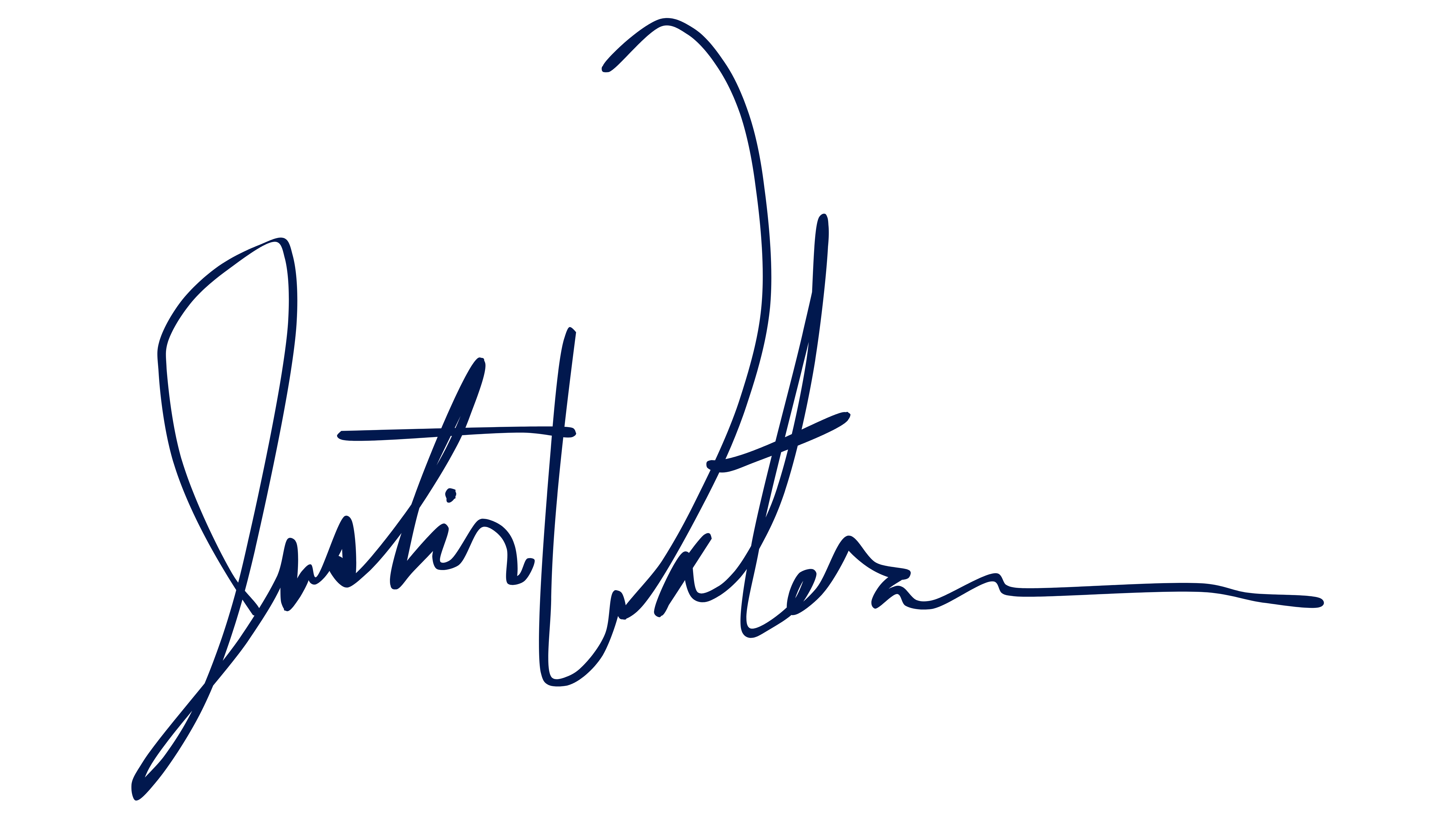
Justin J. Waterman signature
Justin J. Waterman, PMP
WellCommand™ — Predictive Well Intelligence
Founder & Inventor · info@wellcommand.ai
Edition No. 19 Week of November 17–23, 2026
Action Energy Readies Seven New Rigs for Kuwait; Saipem Books Scarabeo 9 Into 2028
Read →
Edition No. 18 Week of November 10–16, 2026
SLB Wins Vår Energi’s Two-Rig NCS Drilling Contract; Weatherford Takes MPD to the Amaralina Star
Read →
Edition No. 16 Week of October 14–20, 2026
Khalda’s Record Wells, Transocean’s $550M Gulf Backlog
Read →
Edition No. 15 Week of October 7–13, 2026
H&P Scales FlexRobotics for Exxon; SLB Lands 15-Year Planning Deal
Read →
Edition No. 14 Week of September 30–October 6, 2026
Saipem Rig Audit and Vår Energi Planning Compression
Read →
Edition No. 13 Week of September 23–29, 2026
Valaris barrier monitoring and Nabors MPD automation lead the week
Read →
Edition No. 12 Week of September 16–22, 2026
U.S. Rig Count Climbs; Angola and Venezuela Open Up
Read →
Edition No. 11 Week of September 9–15, 2026
AI Needs Human Oversight; MPD Still Underused
Read →
Edition No. 10 Week of September 1–7, 2026
Existing pipe, outside capital: how this week’s wells got sanctioned
Read →
Edition No. 09 Catch-up · July 20 – August 17, 2026
Five weeks, one rig: the catch-up edition
Read →
Edition No. 08 Week of August 25–31, 2026
Flat count, rotating capital: the week drilling money chose known rock
Read →
Edition No. 07 Week of July 8–14, 2026
When the driller stops overriding the model
Read →
Edition No. 06 Week of July 2–10, 2026
Kantori posts double-digit ROP gains; Nabors x Corva unify; Devon bets $1B on AI
Read →
Edition No. 05 Week of June 24–July 1, 2026
ADNOC’s Automated Walking Rig Arrives Early; Rig Count Up Eight Straight Weeks
Read →
Edition No. 04 Week of June 8–15, 2026
SLB Opens a Governed AI Marketplace; IADC Names the Autonomy Bottleneck
Read →
Edition No. 03 Week of June 15–22, 2026
SLB Puts a Number on AI; Autonomous Drilling Halves a Libyan Well
Read →
Edition No. 02 Week of June 1–8, 2026
ROGII StarSteer 2026.1; Aramco and Emerson Go After Corrosion; MWD to $8.35B
Read →
Edition No. 01 June 1, 2026
Rystad $500B; Vår Energi Delfi; EZTasks.ai
Read →

About the Author

Justin J. Waterman Founder, Waterman Consulting Services · Inventor, WellCommand™

“Built on the Rock. Engineered for the Future. Forward Always.”

Justin J. Waterman is a Houston-based operator who builds the systems the work actually runs on — construction and owner’s-representative programs, predictive intelligence for drilling, and the AI infrastructure underneath both. He writes From the Rig Floor Report each week for the people doing the work, not the people describing it.